Step-by-Step Tree Planting Guide
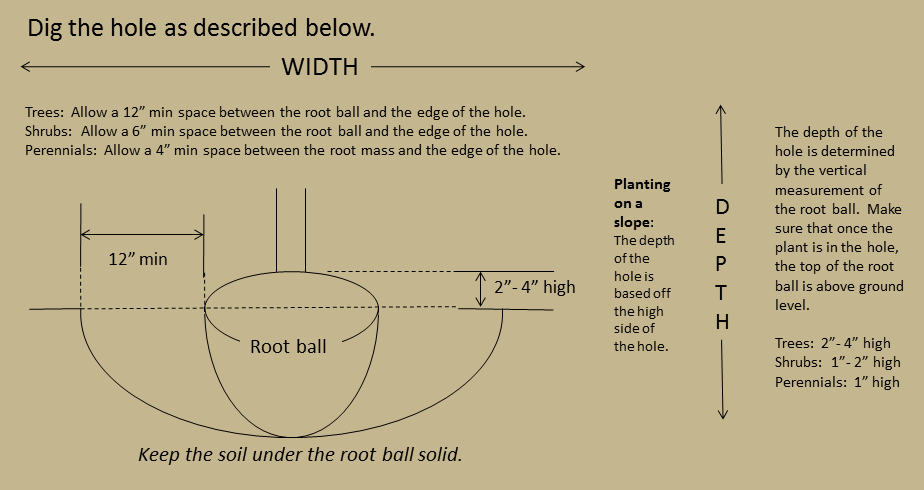
1. Remove the plant from the container
Gently place the tree in the hole. For balled and burlapped trees: once carefully positioned and standing straight, backfill slightly to hold it in place. Then cut and remove all rope tied to the trunk, the top third of the wire basket, and the exposed burlap.
2. Backfill with proper soil mix
Use a well-balanced backfill mix. In Colorado, most soils benefit from a 50:50 mix of native soil and organic compost. If your soil is especially sandy, add more compost. If pure clay, amend more aggressively. Thoroughly mix the amended soil with native soil before backfilling.
3. Build a water basin
Create a raised ring of soil around the base of the tree, approximately 2–3 feet wide. This creates a basin that holds water over the root zone and allows it to slowly percolate into the soil rather than running off.
4. Mulch the base
Apply a 2–4 inch layer of wood chip mulch over the root zone — but keep mulch pulled back 2–3 inches from the trunk to prevent rot and rodent damage. Mulch conserves moisture, suppresses weeds, and moderates soil temperature through Denver's extreme temperature swings.
5. Watering is critical
The single biggest reason newly planted trees die in Denver is improper watering. Here's the schedule:
- Week 1: Water daily
- Weeks 2–4: Water every 2–3 days
- Month 2–3: Water every 5–7 days
- Remainder of year 1: Water every 7–14 days (more often in July–August heat)
- Year 2 and beyond: Deep water every 2–4 weeks during growing season
How much? The rule of thumb: approximately 2–3 gallons per inch of trunk diameter measured 6 inches above the ground. A tree with a 2-inch trunk needs about 4–6 gallons per watering session.
6. How long to stake?
Remove stakes after the first full growing season (one year). Prolonged staking weakens trunk development. A tree that sways gently in the wind develops a stronger, more tapered trunk. Only stake longer if the site is exceptionally windy or the tree keeps leaning.
7. Fertilization
Wait until the second growing season before fertilizing. Newly planted trees need to establish roots first. When you do fertilize, use a slow-release, balanced formula and apply in early spring. Over-fertilizing produces weak, rapid growth vulnerable to Denver's early frosts and heavy winds.
⚠️ Call 811 Before You Dig
It's the law in Colorado. Call 811 or visit colorado811.org at least 2 business days before digging. Utility locate service is free. Buried gas, electric, water, and fiber lines can be anywhere — even where you'd least expect them.